

Introduction
Rugby is one of the most exciting and physically demanding sports in the world. Known for its combination of strength, speed, strategy, teamwork, and endurance, the game requires every player to perform a specific role within a highly organized system. Understanding rugby positions is essential for players, coaches, fans, and anyone interested in learning how the sport operates. Each position carries unique responsibilities that contribute to both attacking and defensive success.
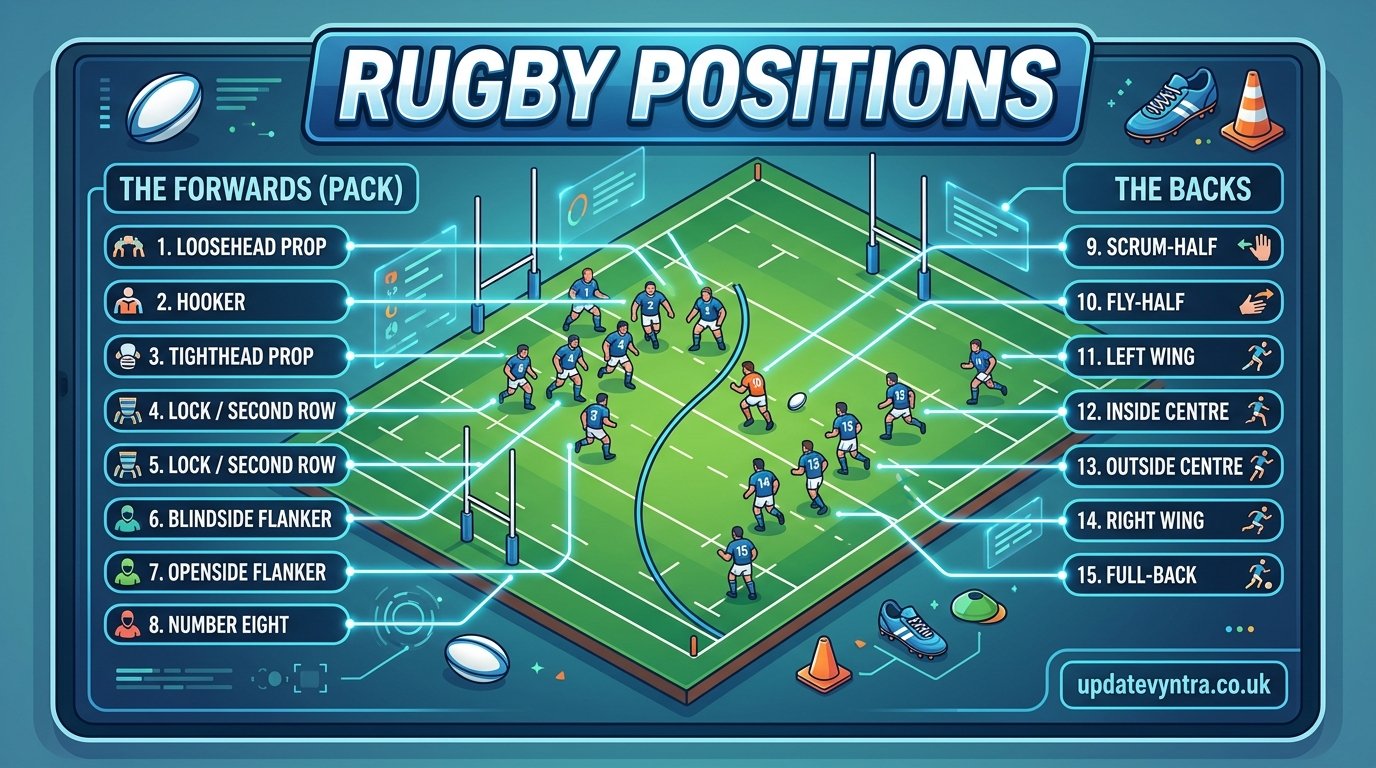
In rugby union, a team consists of fifteen players divided into two groups: forwards and backs. The forwards are generally responsible for winning possession, controlling physical contests, and establishing momentum, while the backs focus on creating scoring opportunities and exploiting space. Although every position has its own duties, modern rugby demands versatility, rugby positions meaning players often contribute in multiple areas of the game. Learning the purpose and characteristics of each position provides valuable insight into rugby tactics and player development.
The structure of rugby positions has evolved significantly over the decades. Professional training methods, advanced tactical systems, and improved athletic standards have transformed player roles. Today’s rugby athletes are faster, stronger, and more skilled than ever before, making positional understanding more important than at any point in the sport’s history.
Understanding the Basic Structure of Rugby Positions
Rugby union positions are traditionally divided into forwards and backs. The eight forwards wear jersey numbers one through eight and form the team’s physical foundation. They are heavily involved in scrums, lineouts, rucks, and mauls, which are critical contests for possession. Their ability to dominate these areas often determines which team controls the match.
The seven backs wear jersey numbers nine through fifteen and typically operate in more open areas of the field. Their primary responsibilities include distributing the ball, executing tactical kicks, creating attacking opportunities, and scoring tries. While backs are often associated with speed and creativity, they must also possess strong defensive skills and tactical awareness.
Modern rugby increasingly blurs the traditional distinction between forwards and backs. Coaches now expect forwards to handle the ball effectively and backs to contribute physically in contact situations. As a result, successful teams rely on all fifteen players working together seamlessly rather than functioning as separate units.
The Front Row: Props and Hooker
The front row consists of the loosehead prop, hooker, and tighthead prop. These players occupy jersey numbers one, two, and three respectively. They form the first line of the scrum and are responsible for generating power, stability, and control during one of rugby’s most technical contests. Front-row players must possess exceptional strength, balance, and scrummaging technique.
Props play a particularly important role in supporting the scrum. The loosehead prop and tighthead prop face different technical challenges depending on their side of the scrum. The tighthead position is often considered one of the most demanding roles in rugby because it absorbs immense pressure from opposing players. Both props must maintain stability while also contributing to open-field play.
The hooker sits between the props and serves as a crucial link in the forward pack. During scrums, the hooker attempts to win possession by striking the ball with their feet. During lineouts, the hooker throws the ball to jumping teammates, requiring remarkable accuracy and consistency. Modern hookers are highly athletic players who frequently carry the ball, support attacks, and contribute defensively throughout the match.
The Second Row and the Importance of Locks
The second row consists of two locks who wear jersey numbers four and five. These players are generally among the tallest athletes on the team because height provides a major advantage during lineouts. Their primary responsibilities include securing possession in set pieces, generating power in scrums, and contributing heavily to physical contests around the field.
Locks are often referred to as the engine room of the scrum because they provide much of the driving force behind the front row. Their strength and technique help stabilize the entire pack while creating forward momentum. Successful scrummaging frequently depends on the effectiveness of the second row.
Outside of set pieces, locks are expected to maintain a high work rate. They make tackles, carry the ball into contact, secure possession at rucks, and support attacking phases. Modern locks are considerably more mobile than their predecessors and often display impressive ball-handling skills despite their large size. Their combination of power, endurance, and athleticism makes them indispensable to successful rugby teams.
The Back Row: Flankers and Number Eight
The back row includes the blindside flanker, openside flanker, and number eight. Wearing jersey numbers six, seven, and eight, these players are among the most active participants in a rugby match. Their responsibilities extend across attack, defense, and possession contests, making them some of the most versatile athletes on the field.
Flankers specialize in disrupting opposition possession and supporting their own team’s attacking efforts. The openside flanker is often known for speed, mobility, and the ability to win turnovers at the breakdown. The blindside flanker generally provides additional physical strength and defensive presence. Both positions require exceptional fitness because flankers cover large areas of the field throughout the game.
The number eight occupies a unique position at the rear of the scrum. This player controls the ball during scrummaging situations and frequently acts as a bridge between forwards and backs. Number eights are often powerful ball carriers capable of gaining significant territory and breaking defensive lines. Their blend of size, skill, and athleticism makes them key figures in modern rugby tactics.
The Scrum-Half: Connecting Every Phase of Play
The scrum-half wears jersey number nine and serves as the link between the forwards and backs. This position requires outstanding decision-making, communication, and technical passing ability. Because the scrum-half handles the ball more frequently than most players, their influence on the pace and direction of play is enormous.
At every breakdown, scrum-halves collect possession and distribute it to teammates. Quick, accurate passing allows attacking movements to develop before defenses can organize. The quality of service provided by the scrum-half often determines how effectively a team executes its tactical plans.
Despite being among the smaller players on the field, scrum-halves must demonstrate courage and resilience. They regularly defend against larger opponents and operate in congested areas where physical contact is unavoidable. Elite scrum-halves combine intelligence, speed, leadership, and technical excellence to control the rhythm of a match.
The Fly-Half: The Tactical Leader of the Team
The fly-half, wearing jersey number ten, is widely regarded as the strategic leader of the backline. This player directs attacking movements, chooses tactical kicking options, and manages field position. Because of their influence on decision-making, fly-halves are often compared to playmakers in other major sports.
A successful fly-half must possess exceptional vision and game awareness. They constantly analyze defensive structures, identify weaknesses, and determine the most effective attacking approach. Whether passing to teammates, kicking for territory, or launching offensive moves, every decision can significantly impact the outcome of the game.
The role also demands composure under pressure. Opposing teams frequently target the fly-half because disrupting this position can affect an entire team’s attacking structure. Strong communication, leadership, and confidence are therefore essential qualities. Many of rugby’s greatest players have excelled at fly-half because of the position’s central importance to team success.
Centers and Their Influence on Attack and Defense
The center partnership consists of the inside center and outside center, wearing jersey numbers twelve and thirteen. These players occupy the midfield area and play a crucial role in linking the fly-half with the wider attacking players. Their responsibilities include carrying the ball, distributing passes, creating opportunities, and organizing defensive structures.
Inside centers are often powerful runners capable of challenging defensive lines directly. Their ability to attract defenders creates space for teammates and helps generate attacking momentum. Many teams use their inside center as a primary ball carrier during structured attacking phases.
Outside centers typically focus on exploiting gaps and supporting attacking movements. They require excellent speed, awareness, and decision-making skills because they often operate in situations where a single mistake can determine whether an attack succeeds or fails. Defensively, centers must communicate effectively to maintain alignment and prevent opponents from finding space through the midfield.
Wings and Fullbacks in Modern Rugby
The wings wear jersey numbers eleven and fourteen and are usually among the fastest players in rugby. Positioned near the sidelines, they are responsible for finishing attacking moves and converting opportunities into tries. Their speed and agility make them dangerous threats whenever space becomes available.
Modern wingers contribute far more than scoring alone. They participate in defensive systems, compete for high kicks, support counterattacks, and assist in maintaining field position. Many elite wings combine explosive acceleration with impressive strength, making them difficult to tackle in open space.
The fullback, wearing jersey number fifteen, acts as the team’s final line of defense. This player must possess excellent positioning, reliable handling skills, and strong kicking ability. Fullbacks frequently field opposition kicks and launch counterattacks that transform defensive situations into attacking opportunities. Their versatility and tactical awareness make them among the most complete players on the field.
Physical and Technical Skills Required for Different Rugby Positions
Different rugby positions demand different combinations of physical and technical abilities. Front-row players rely heavily on strength, balance, and scrummaging expertise, while locks benefit from height, power, and endurance. Back-row players require mobility, tackling ability, and versatility to perform effectively across multiple phases of play.
Among the backs, technical skills become increasingly important. Scrum-halves and fly-halves require exceptional passing, kicking, and decision-making abilities. Centers must balance power with creativity, while wings and fullbacks depend on speed, positioning, and finishing skills. Every position requires a unique blend of athletic and tactical qualities.
Professional rugby training programs now emphasize all-around development. Players are encouraged to improve strength, speed, agility, conditioning, ball-handling, and tactical understanding regardless of position. This evolution has created more complete athletes capable of contributing in every aspect of the game.
How Rugby Positions Work Together to Create Success
No rugby position operates independently. Success depends on coordinated teamwork among all fifteen players. Forwards establish possession and create opportunities through physical dominance, while backs use that possession to launch attacks and exploit defensive weaknesses. Every phase of play requires communication, trust, and collective execution.
Modern rugby strategies emphasize continuity and adaptability. Teams frequently move the ball through multiple phases while maintaining support from both forwards and backs. Players must understand not only their own responsibilities but also how their actions influence teammates. Effective teamwork allows a side to maximize its strengths while minimizing vulnerabilities.
The best rugby teams demonstrate exceptional balance between physicality and skill. rugby positions Their forwards provide a strong platform, their backs execute tactical plans efficiently, and every player contributes defensively. This interconnected structure is one of the reasons rugby remains one of the most strategically fascinating sports in the world.
Conclusion
Rugby positions form the foundation of a sport built on teamwork, strategy, physicality, and skill. Every position, from the front-row props to the fullback, carries specific responsibilities that contribute to overall team performance. Understanding these roles provides valuable insight into how rugby matches are won and why different players develop specialized skill sets.
As the game continues to evolve, rugby players are becoming increasingly versatile, combining traditional positional strengths with modern athletic demands. Nevertheless, rugby positions the fundamental structure of forwards and backs remains central to the sport’s identity. By learning the responsibilities, techniques, and characteristics associated with each position, players and fans can gain a deeper appreciation for the complexity and excitement that make rugby one of the world’s most respected team sports.
