

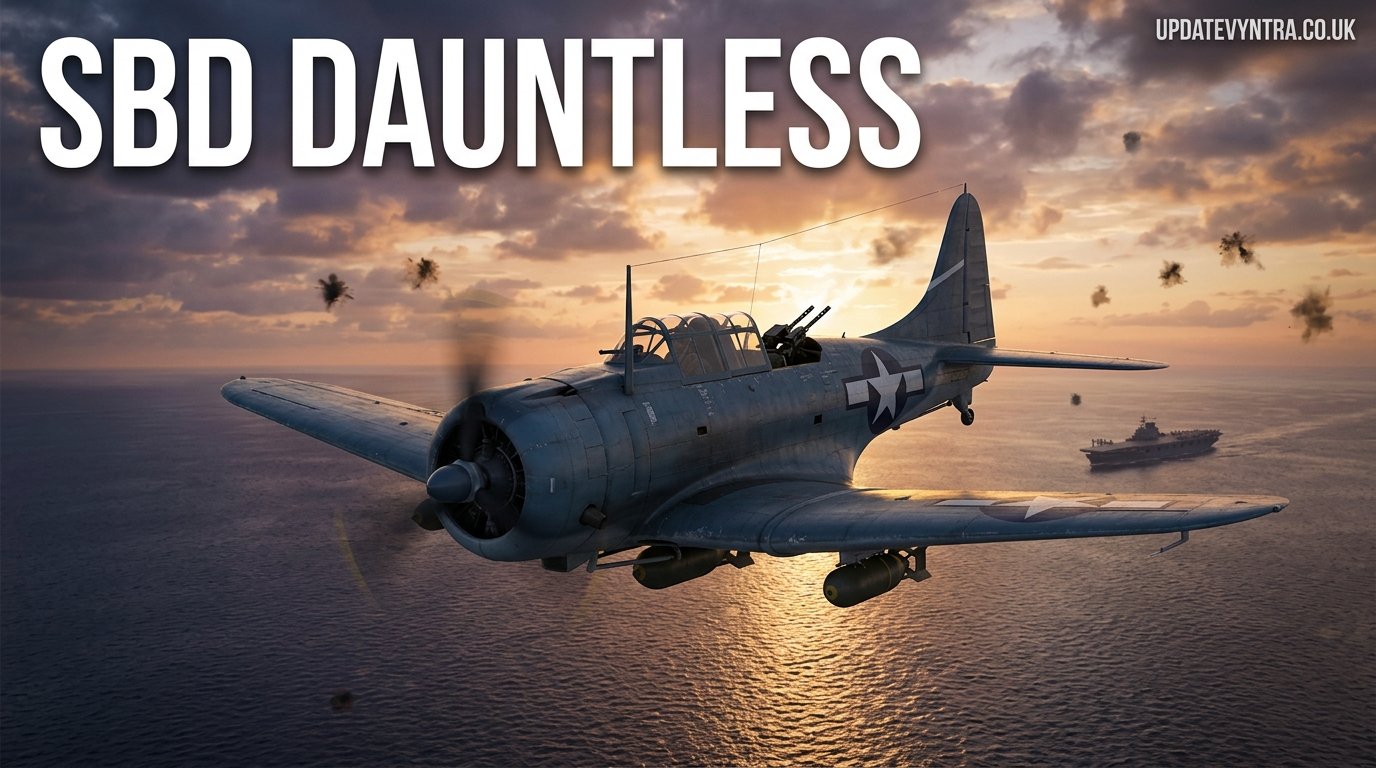
The SBD Dauntless remains one of the most respected military aircraft in aviation history. Designed as a carrier-based dive bomber for the United States Navy and Marine Corps, it earned a reputation for remarkable accuracy, rugged construction, and dependable performance during some of the most decisive battles of World War II. Although newer aircraft eventually replaced it, the Dauntless proved that precision, skilled pilots, and reliable engineering could outweigh faster or more heavily armed competitors in many combat situations.
From its first operational missions to its decisive role in the Pacific Theater, the SBD Dauntless demonstrated exceptional effectiveness against enemy warships and strategic targets. Aviation historians frequently recognize it as one of the aircraft that significantly influenced the outcome of the war in the Pacific. Even decades after its retirement, restored examples continue to fly at airshows and remain treasured exhibits in museums around the world. This enduring legacy has made the SBD Dauntless a popular subject for military historians, aviation enthusiasts, model builders, and researchers interested in World War II aircraft.
The Development and Design of the SBD Dauntless
The story of the SBD Dauntless began during the late 1930s when the United States Navy sought a modern dive bomber capable of operating effectively from aircraft carriers. Douglas Aircraft Company developed the aircraft from the earlier Northrop BT design after acquiring Northrop Corporation. Engineers refined the original concept by improving its structure, increasing its payload capacity, enhancing stability, and incorporating more reliable systems. The result was an aircraft specifically optimized for precision dive bombing while maintaining the durability needed for naval operations.
One of the most recognizable features of the SBD Dauntless was its perforated dive brakes. These uniquely designed flaps reduced excessive speed during steep dives without causing dangerous instability. Combined with excellent cockpit visibility, responsive flight controls, and a strong airframe, these features enabled pilots to execute highly accurate bombing attacks against moving naval targets. The aircraft also incorporated self-sealing fuel tanks and armor protection, greatly improving crew survivability during combat missions.
Technical Specifications and Performance Capabilities
The SBD Dauntless was powered by a Wright R-1820 Cyclone radial engine that provided dependable performance under demanding combat conditions. Although it was not the fastest aircraft of its era, its balance of maneuverability, reliability, and stability made it highly effective in its intended role. Depending on the production variant, the aircraft reached maximum speeds of approximately 255 miles per hour and possessed an operational range suitable for carrier-based strike missions throughout the Pacific.
The aircraft normally carried a crew of two consisting of a pilot and a rear gunner who also operated the radio equipment. Its offensive armament included forward-firing .50-caliber machine guns and flexible rear-mounted .30-caliber machine guns for defensive protection. Most importantly, the Dauntless could carry a bomb load that often included a single 1,000-pound bomb beneath the fuselage along with smaller bombs mounted beneath the wings. This configuration allowed the aircraft to attack large warships, troop concentrations, supply facilities, and fortified positions with remarkable precision.
Combat Debut and Early Wartime Service
The SBD Dauntless entered combat during the opening months of American involvement in World War II following the attack on Pearl Harbor. At a time when the United States was rebuilding its naval strength, carrier-based aviation became increasingly important because aircraft carriers could project power across vast distances in the Pacific Ocean. The Dauntless quickly became one of the Navy’s primary offensive weapons, participating in numerous missions against Japanese naval and military targets.
Early operations demonstrated both the strengths and challenges of carrier warfare. Pilots often flew long distances over open ocean before locating enemy forces, requiring exceptional navigation skills and careful fuel management. Despite these demanding conditions, Dauntless crews consistently delivered accurate bombing attacks that inflicted serious damage on enemy ships. Their professionalism helped establish confidence in carrier aviation as a decisive component of modern naval warfare.
The Critical Role in the Battle of Midway
No discussion of the SBD Dauntless is complete without examining its extraordinary contribution during the Battle of Midway in June 1942. This battle stands as one of the most important turning points of World War II in the Pacific. American codebreakers successfully identified Japanese operational plans, allowing United States carrier forces to prepare an ambush despite being significantly outnumbered.
During the battle, squadrons of SBD Dauntless dive bombers launched coordinated attacks that struck multiple Japanese aircraft carriers within a matter of minutes. The resulting explosions and uncontrollable fires devastated the enemy fleet, destroying carriers that had participated in earlier operations, including the attack on Pearl Harbor. Historians widely agree that the remarkable accuracy of Dauntless crews fundamentally altered the strategic balance of naval power in the Pacific. The victory demonstrated the overwhelming effectiveness of well-executed carrier aviation and cemented the aircraft’s place in military history.
Service Throughout the Pacific Theater
Following Midway, the SBD Dauntless continued serving across numerous campaigns in the Pacific Theater. It supported amphibious invasions, attacked shipping convoys, bombed airfields, and provided close air support for ground forces during difficult island campaigns. From Guadalcanal to the Solomon Islands and beyond, Dauntless squadrons repeatedly demonstrated their ability to operate in challenging environments under constant threat from enemy fighters and anti-aircraft fire.
The aircraft earned widespread respect from pilots because of its forgiving handling characteristics and impressive structural strength. Many damaged Dauntless aircraft successfully returned to their carriers despite sustaining heavy combat damage. Maintenance crews also appreciated its relatively straightforward construction, allowing repairs to be completed quickly even under wartime conditions. These qualities contributed significantly to its operational success throughout extended campaigns.
Variants and Continuous Improvements
As operational experience accumulated, Douglas Aircraft introduced several improved versions of the SBD Dauntless. Early production models established the aircraft’s basic design, while later variants incorporated stronger engines, greater fuel capacity, improved armor protection, and enhanced weapon systems. Each successive model reflected lessons learned during combat, ensuring that the aircraft remained competitive as battlefield conditions evolved.
Among the best-known versions were the SBD-3, SBD-4, SBD-5, and SBD-6. The SBD-5 became the most widely produced variant, featuring increased engine power and improved performance for extended combat operations. The final production model, the SBD-6, included additional refinements designed to maximize operational efficiency. These continuous improvements demonstrated the flexibility of the original design and its ability to adapt to changing military requirements throughout the war.
The Pilots, Crews, and Operational Experience
Behind every successful mission were highly trained pilots, rear gunners, mechanics, armorers, and carrier personnel whose combined efforts ensured operational readiness. Dive bombing required exceptional precision because pilots intentionally directed their aircraft into steep descents toward heavily defended targets before releasing their bombs and pulling out at extremely low altitudes. This demanding maneuver required courage, discipline, and countless hours of training.
Rear gunners performed equally important roles by defending the aircraft against enemy fighters while maintaining radio communications and assisting with navigation. Ground crews worked tirelessly aboard aircraft carriers and island airfields to maintain engines, repair battle damage, reload ammunition, and prepare aircraft for subsequent missions. The teamwork among flight crews and maintenance personnel became one of the defining strengths of the Dauntless program and contributed directly to its impressive combat record.
Legacy, Historical Importance, and Preservation
Although newer aircraft such as the Curtiss SB2C Helldiver eventually replaced the SBD Dauntless in frontline service, many historians believe the Dauntless remained the more dependable and beloved aircraft among its crews. Its wartime achievements far exceeded expectations, and its success demonstrated that precision and reliability could prove more valuable than raw speed alone. The aircraft’s record against enemy warships remains one of the most impressive accomplishments achieved by any dive bomber during World War II.
Today, surviving SBD Dauntless aircraft are carefully preserved in aviation museums and private collections across the United States and other countries. Restoration specialists invest thousands of hours returning these historic aircraft to flying condition while preserving their authentic appearance and engineering. Airshows featuring restored Dauntless aircraft allow modern audiences to witness the distinctive sound of the Wright Cyclone engine and appreciate the engineering that made the aircraft famous. Documentary films, books, museum exhibits, and educational programs continue introducing new generations to its remarkable story.
Why the SBD Dauntless Continues to Fascinate Aviation Enthusiasts
Interest in the SBD Dauntless extends far beyond military history because it represents an important milestone in aviation technology, naval strategy, and aircraft engineering. Researchers study its combat effectiveness, restoration experts analyze its construction techniques, and aviation enthusiasts admire its distinctive appearance and historical significance. Scale model manufacturers continue producing detailed replicas, while flight simulation communities frequently recreate Dauntless missions to better understand the challenges faced by wartime crews.
The aircraft also serves as a powerful reminder of how innovation, preparation, and skilled personnel can influence the outcome of history. Universities, military academies, and aviation museums frequently reference the Dauntless when discussing carrier warfare, operational planning, and technological development during World War II. Its continued popularity demonstrates that truly exceptional engineering achievements retain their educational and cultural value long after active service has ended.
Conclusion
The SBD Dauntless occupies a unique place in military aviation history because of its unmatched contribution to Allied success during World War II. Designed for precision dive bombing and carrier operations, it combined rugged construction, dependable performance, and exceptional bombing accuracy into a highly effective combat aircraft. From its development by Douglas Aircraft Company to its decisive victories during the Battle of Midway and its continued service throughout the Pacific Theater, the Dauntless consistently proved itself as one of the most successful naval aircraft ever built.
Its legacy continues through preserved aircraft, museum collections, historical research, restoration projects, and educational programs that celebrate its extraordinary achievements. The SBD Dauntless remains a symbol of courage, engineering excellence, and strategic innovation, reminding future generations how a well-designed aircraft and highly trained crews helped shape the outcome of one of history’s greatest conflicts. As interest in World War II aviation continues to grow, the SBD Dauntless stands as an enduring icon whose influence on military aviation and naval warfare will never be forgotten.
