

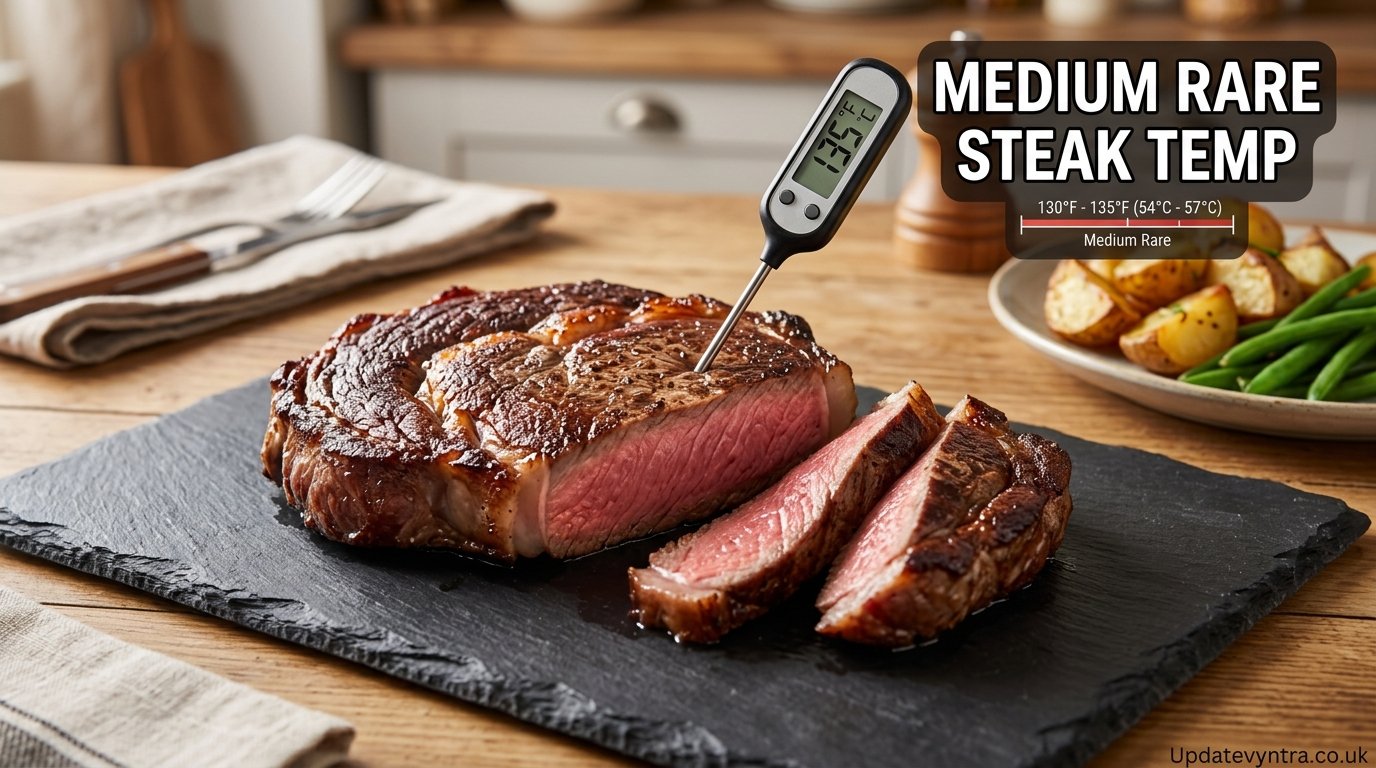
Cooking a steak to the right level of doneness can feel surprisingly tricky. You want the outside beautifully browned, the inside juicy and tender, and the center cooked just enough without becoming dry or tough. That is why understanding the medium rare steak temp is so useful for anyone who enjoys cooking steak at home.
Medium rare is often preferred because it creates a balance between a flavorful crust and a warm, tender center. But simply guessing the temperature can lead to inconsistent results. A reliable meat thermometer makes it much easier to know when your steak is approaching the desired doneness.
For traditional medium rare, many chefs aim for an internal temperature of about 130°F to 135°F (54°C to 57°C). However, the steak continues cooking after it is removed from the heat, a process known as carryover cooking. Food-safety guidance is also important: the USDA recommends cooking whole cuts of beef to at least 145°F (63°C) and allowing them to rest for at least three minutes. If food safety is your priority, follow that recommendation rather than aiming for a lower temperature.
What Is the Ideal Medium Rare Steak Temp?
Medium Rare Steak Temp: The commonly used temperature range for medium rare steak is around 130°F to 135°F (54°C to 57°C). At this stage, the center is generally warm and reddish-pink, while the exterior can develop a rich brown crust when the steak is cooked properly. The exact appearance can vary depending on the cut, cooking method, and thickness.
Medium Rare Steak Temp: Temperature is more dependable than appearance alone. A steak can look pink for different reasons, and color does not always tell you whether the meat has reached a particular internal temperature. Using an instant-read thermometer allows you to check the center without relying entirely on guesswork.
It is also worth remembering that the temperature can rise after the steak leaves the pan, grill, or oven. This is called carryover cooking. For that reason, some cooks remove a steak from the heat slightly before it reaches their desired final temperature. However, if you are following USDA food-safety guidance, cook the steak to at least 145°F and rest it for three minutes.
Medium Rare Steak Temp: The thickness of the steak also matters. A thin steak can move through temperature ranges quickly, while a thick-cut steak may need considerably more time. This is why cooking by time alone is often less reliable than checking the internal temperature.
How to Check Steak Temperature Correctly
Medium Rare Steak Temp: Using a meat thermometer is one of the simplest ways to improve your steak-cooking results. Insert the thermometer into the thickest part of the steak, aiming toward the center. Try not to touch the pan, grill grate, or any bone, because doing so can give you an inaccurate reading.
For a thick steak, checking from the side can sometimes make it easier to position the thermometer in the center. If you are cooking multiple steaks, check each one individually because they may not all have exactly the same thickness or starting temperature.
It is best to check the temperature toward the end of cooking rather than repeatedly piercing the meat from the beginning. Once you have a reliable reading, you can decide whether the steak needs additional cooking or is ready to rest.
After cooking, give the steak time to rest. Resting allows the juices to redistribute through the meat and makes the steak easier to slice. A short resting period can also make the final temperature more stable.
Why Temperature Matters More Than Cooking Time
Medium Rare Steak Temp: Recipes sometimes provide cooking times such as three minutes per side or five minutes per side. These instructions can be useful as general estimates, but they cannot account for every situation. A steak’s thickness, starting temperature, pan temperature, cooking method, and even the type of cut can change the result.
For example, a thin steak can cook much faster than a thick ribeye. A steak taken directly from a cold refrigerator may also behave differently from one that has been sitting out briefly before cooking.
That is why the medium rare steak temp is a more useful reference than a fixed cooking time. Instead of wondering whether the steak has been cooked for long enough, you can check its internal temperature and make a more informed decision.
How to Cook a Steak for a Beautiful Crust
Medium Rare Steak Temp: Getting the temperature right is only part of making a great steak. The exterior also needs enough heat to develop a flavorful browned crust. A hot cooking surface is essential for this process.
Before cooking, pat the steak dry with clean paper towels. Excess surface moisture can interfere with browning. Season the steak according to your preference, then place it on a properly heated cooking surface.
A heavy skillet, grill, or another suitable cooking method can produce excellent results. The key is to avoid constantly moving the steak around. Allowing the surface to remain in contact with the hot cooking area helps create better browning.
Once the steak is close to your desired internal temperature, remove it from the heat and allow it to rest. Remember that the final temperature can continue to rise slightly because of residual heat.
If you are cooking for someone who prefers a different level of doneness, temperature is again the easiest way to adjust the result. Rather than relying on the outside appearance, check the internal temperature and cook accordingly.
Medium Rare vs. Other Steak Temperatures
Medium Rare Steak Temp: Medium rare sits between rare and medium in terms of doneness. Rare steak has a cooler, more red center, while medium steak has a warmer center with less redness. Medium well and well-done steaks are cooked for longer and reach higher internal temperatures.
The difference is not simply about color. As steak cooks to higher temperatures, its texture changes. Longer cooking generally results in a firmer and less tender texture, while shorter cooking can preserve more moisture and tenderness.
However, personal preference plays a major role. Some people enjoy a more thoroughly cooked steak, while others prefer a softer center. The important thing is to understand the temperature you are targeting and to consider food-safety recommendations when making your choice.
For anyone preparing steak for other people, it is especially helpful to ask about their preferred doneness rather than assuming everyone wants medium rare.
Common Mistakes When Cooking Medium Rare Steak
One common mistake is relying completely on color. Looking at the center after cutting into the steak may seem like an easy way to judge doneness, but it is not as precise as using a thermometer. Another mistake is cooking according to a recipe’s time without considering steak thickness.
Another issue is forgetting about carryover cooking. A steak does not necessarily stop cooking the moment it leaves the heat. Its internal temperature can continue increasing during the resting period.
Finally, rushing the resting stage can affect the eating experience. Giving the steak a few minutes to rest can help the juices settle and make slicing easier.
Keeping these simple points in mind can make steak preparation much more consistent. You do not need complicated equipment or advanced culinary techniques. A suitable cooking surface, a reliable thermometer, and attention to food safety can go a long way.
Final Thoughts on Medium Rare Steak Temp
Knowing the correct medium rare steak temp gives you a much better starting point for cooking steak consistently. The commonly cited range of 130°F to 135°F (54°C to 57°C) describes medium rare, but it is important to distinguish culinary preference from food-safety guidance. The USDA recommends whole cuts of beef reach 145°F (63°C) followed by at least a three-minute rest.
A thermometer is one of the most useful tools because cooking time and appearance can vary significantly from one steak to another. Checking the thickest part of the meat provides a clearer indication of its internal temperature.
Ultimately, great steak comes down to balancing temperature, cooking technique, and personal preference. Whether you are preparing dinner for yourself or serving others, understanding temperature makes the process more predictable. With careful cooking and proper food-safety practices, you can enjoy a flavorful steak while making informed decisions about its doneness.
